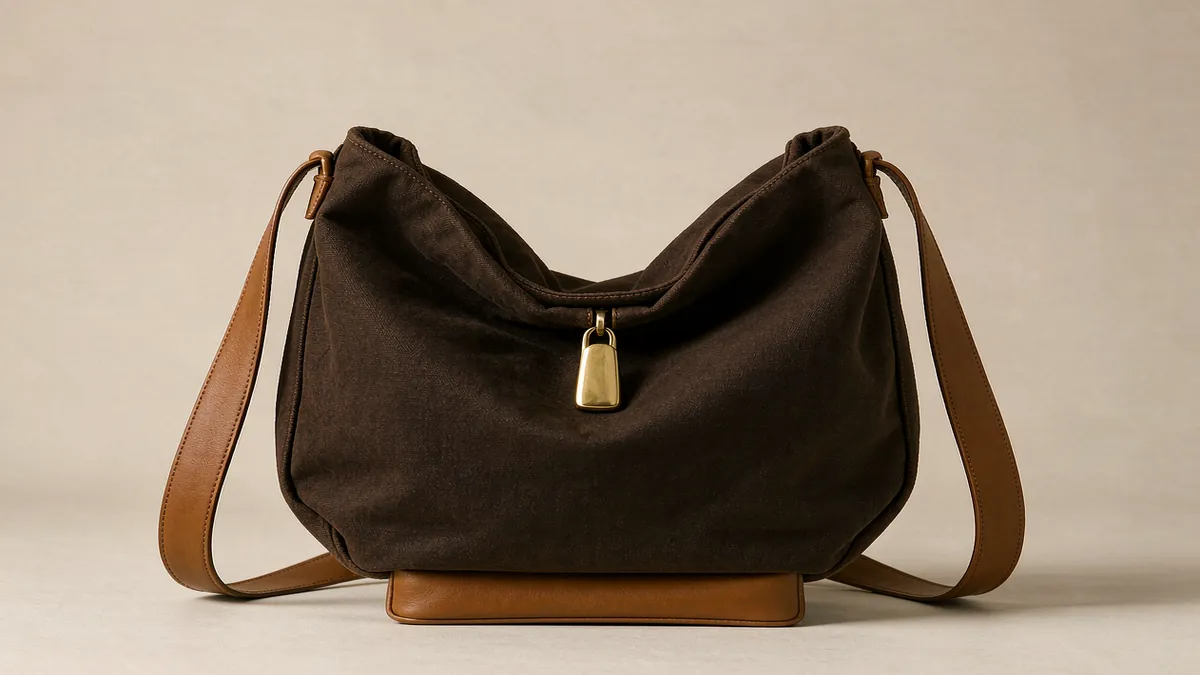
Buying custom bags is a small-order manufacturing problem dressed up as a purchasing decision. The buyer has to judge a workshop they cannot easily visit, on a product they have not held, against a deadline they cannot move. Most of the risk sits in three places: an unclear specification, a sample that was never properly approved, and a supplier who answered questions they should have asked instead.
Start with the specification, not the price
A bag quotation is only meaningful against a defined build. Two suppliers can quote the same silhouette at very different prices because one is using 10 oz canvas and the other 16 oz, or because one has allowed for a reinforced base panel and the other has not. If you request prices before you have written down the fabric, the dimensions, the lining, the zip and the logo method, you are comparing things that are not the same product.
Write a one-page spec sheet before you contact anyone. It does not need to be technical. It needs to state:
- Product type and rough dimensions, or the item the bag must hold
- Fabric you want, or the hand-feel and durability you need described in plain language
- Colour references, as Pantone numbers where you have them
- Logo method and artwork file
- Target quantity per colourway, and the total
- Any market requirement: labelling, packaging, restricted substances, testing documentation
A workshop that engages with that sheet — and pushes back on the parts that will not work — is telling you something useful. So is one that replies with a price and nothing else.
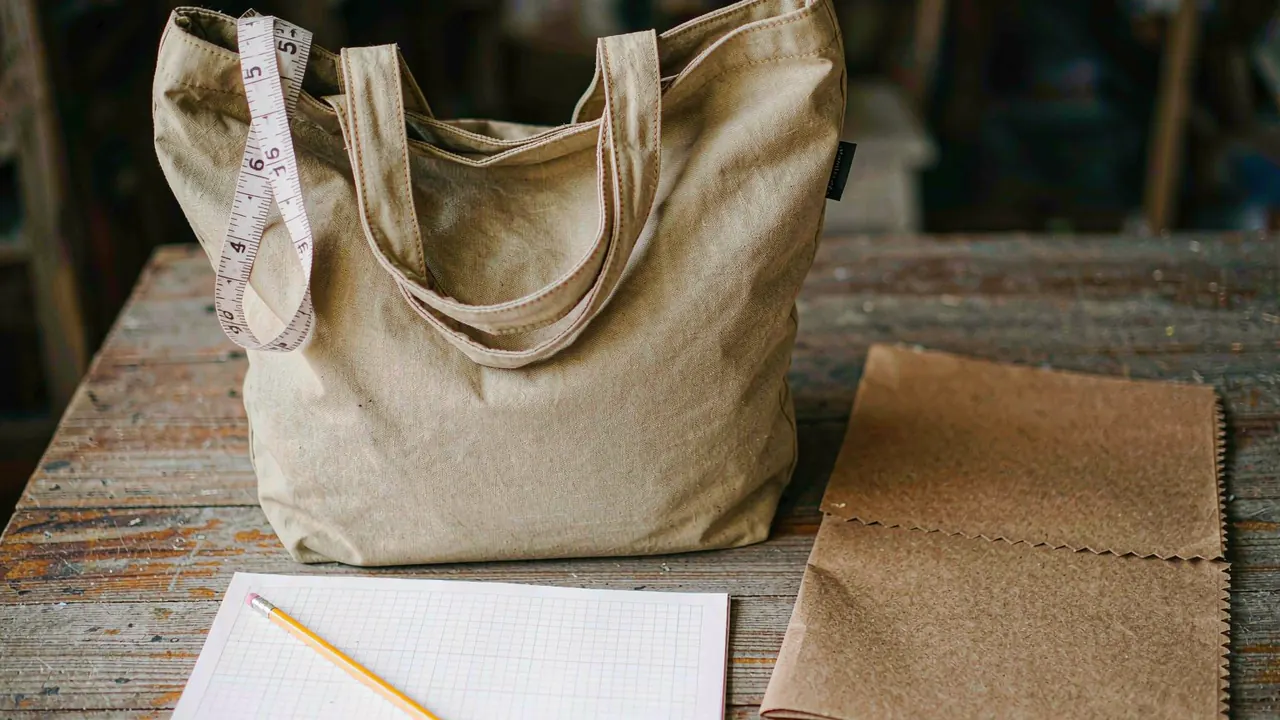 B-02 / SPECMeasuring a sample
Questions that reveal how a workshop works
Most buyer questionnaires ask about factory size, years in business and certifications. Those answers are easy to give and hard to verify. These are more useful:
- Which part of this bag would you change before we sample it? A supplier with production experience will name a construction risk immediately. Silence here is a warning.
- Who cuts the pattern? If the answer is vague, the workshop may be outsourcing the part of the process that most affects fit and consistency.
- What happens when the fabric you ordered is out of stock? The answer should describe a decision process, not a promise that it will not happen.
- Can we see the actual stitching on a comparable product you have made? Photographs of finished bags hide stitch density. Ask for a close-up.
- How do you record the approved specification? If the answer is "we remember", every repeat order becomes a new negotiation.
You are not looking for perfect answers. You are looking for specificity. A small workshop that says "we do the cutting in-house, the embroidery is subcontracted two streets away, and we check the first ten pieces together before running the batch" is far more reassuring than a generic claim of full vertical integration.
Sample discipline
The sample is the contract. Everything after it is an argument about whether the bulk matches it. Treat the sample as a document, not a gift:
- Approve in writing, with photographs. Photograph the sample from the same angles as the bulk inspection will use: front, back, side, interior, zip close-up, logo close-up.
- Label the approved sample. Keep one signed or tagged unit with the supplier so the reference is not a matter of memory.
- Write the tolerance down. "Colour to be within a reasonable match" is not a tolerance. Say what you will accept on shade, dimension and stitch count.
- Test it like a customer would. Fill it, zip it, drop it, carry it for a day. Problems that appear in the first hour of use are cheaper to fix before bulk.
Two sampling rounds are normal and not a sign of a bad supplier. Three or more usually means the specification was unclear rather than the workshop being incapable.
Red flags worth walking away from
- Guaranteed delivery dates given before the sample exists
- Prices that do not move when you halve the quantity or add a second colourway
- Reluctance to put the approved specification in writing
- Photographs of products that appear on several other suppliers' websites
- Claims about certifications or client lists that cannot be produced as documents
- Pressure to pay a large deposit before any sample is discussed
The last one matters most. A workshop that needs the full order value up front is financing production with your money, which usually means something upstream is unstable.
A short pre-order checklist
- Spec sheet written and shared, with fabric, dimensions, lining, zip and logo method
- Sample approved in writing, photographed, and one unit retained by both sides
- Bulk price broken down by quantity break so you can see where the thresholds are
- Payment schedule tied to production milestones, not only to the calendar
- Inspection method agreed: who checks, at what stage, against which points
- Packing and labelling confirmed, including barcode and carton marks
- Named contact on the supplier side who answers during production, not only during sales
None of this is exotic. It is the ordinary discipline of small-batch manufacturing, and it is what separates a first order from a supply relationship.